


Different types of helminths can parasitize the human body.Most often, people encounter worms that choose the intestines as their permanent place.But helminthic infection can also develop in muscle tissue and other systems and organs.Regardless of which part of the body the worms parasitize, they cause enormous damage to health and cause the development of very dangerous pathologies.
People can prevent the serious consequences of helminthic infections only if they detect the "infection" in time and undergo drug treatment.The presence of parasites can be recognized by characteristic symptoms that appear either immediately or after the incubation period.
How can you get infected?

Anyone can become infected with helminthiasis, as parasites can enter the body in several ways:
- When drinking unboiled water.Many people think that wells and springs contain the purest water, but they are deeply mistaken.It may be transparent and contain no visible impurities, but cysts and larvae of various types of helminths can live in it.
- In contact with animals.Even pets can become carriers of worms.Parasite eggs often stick to their fur, and if you pet your pet and don't wash your hands afterwards, you are likely to become infected.
- When eating unwashed vegetables, greens and fruits.Eggs and larvae of worms can also be found in meat and fish products, so they must be heat treated during cooking.
- While swimming in artificial and natural reservoirs.When visiting saunas, public baths, swimming pools.
- Through insects, which are "temporary hosts" of helminths and infect humans when they bite.
- Through dirty hands.Many people ignore the banal standards of personal hygiene.They do not wash their hands in toilets, public places, etc.after your visit.As a result, they have to deal with helminthic infections more often than others.
- During earthworks and garden work.Cysts of many types of parasites can live in the soil for a long time, maintaining their viability.If someone does not wash their hands after finishing work, they can become infected.
- When you come into contact with a sick person.A banal handshake, resting in a bed, sexual contact and even a kiss can cause infection.
How to identify parasites in the human body based on symptoms

Each type of helminthiasis can show unique symptoms.
But there are several general signs that can help identify the presence of parasites:
Allergic reactions |
During their parasitic activity, worms emit large amounts of toxic substances.As a result, people develop allergic reactions.In most cases, severe itching occurs.Characteristic rashes may appear on the skin.Acne, boils and pimples may appear.Such rashes do not respond well to treatment with conventional dermatological medicines. |
Digestive disorders |
There are many types of helminths in the intestine, attached to its wall with suction cups and hooks.As a result, a mechanical effect prevails on the mucous membranes, and inflammatory processes develop in the organ. |
Stagnation of bile |
Some types of helminths parasitize in the gallbladder area.Because they are large, they block the bile ducts.As a result, bile stagnates in patients, which leads to the development of dyskinesia.In addition, disruption of the bile drainage process negatively affects liver function. |
Disturbance of bowel movements |
In most cases, helminthiasis in humans is accompanied by constipation or diarrhea.This, in turn, leads to intestinal obstruction, dehydration and other pathologies. |
Dysbacteriosis |
If a person's intestinal function is impaired, this leads to the development of dysbiosis in most cases.Sometimes people perceive symptoms such as diarrhea or constipation as signs of dysbiosis.They start taking probiotics or antibiotics, but the therapy does not bring the expected results |
Reduced immunity |
Worms, abundantly populating the body of their victim, suck out all the useful substances that penetrate with food.As a result, the patient's immunity begins to weaken and his body becomes more vulnerable to infections and viruses. |
Pain syndrome |
The presence of worms is often accompanied by pain in the muscle and joint tissues, abdomen, intestines and other organs |
Weight loss or gain |
A person suffering from a helminthic infection can either quickly lose his appetite or, on the contrary, increase his appetite.This leads to weight loss or weight gain. |
Anemia |
Certain types of worms can infect the hematopoietic system.As a result, patients develop anemia due to iron deficiency |
Vitamin deficiency |
Throat worms extract all useful microelements from the food that enters the intestines.Therefore, the patient experiences a vitamin deficiency |
Central nervous system disorders |
Many patients complain of sleep disturbances, nervousness and irritability.In addition, against the background of helminth infections, chronic fatigue syndrome may occur, as a result of which performance decreases, apathy appears, memory deteriorates, and concentration of attention decreases. |
Malignant tumors |
Helminthic infections have a negative effect on the entire human body.Malignant tumors can appear against the background of frequent inflammation, poisoning and mechanical damage to organs. |
How to detect parasites in the body in women and men
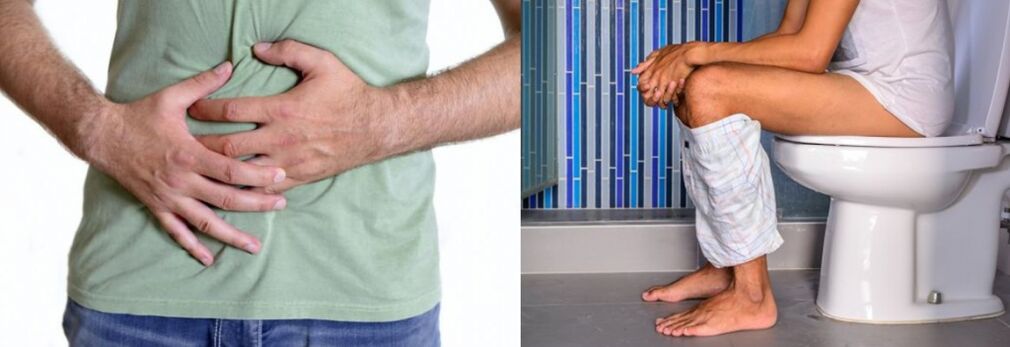
There are several specific signs that allow you to find out about the presence of parasites in the body of men and women:
For a female audience |
For a male audience |
|---|---|
|
|
Symptoms of helminthiasis in children

In young children, helminthic infections are accompanied by the following symptoms:
- salivation increases;
- intestinal immunity is impaired;
- severe itching appears in the anal area;
- rapid weight loss;
- taste preferences change, children persistently demand sweets;
- irritability and tearfulness appear;
- sleep disturbed;
- the skin is painfully pale and dry;
- mental and physical development lags behind;
- metabolism and metabolic processes are disrupted;
- allergic manifestations are observed;
- a dry cough appears;
- rhinitis begins;
- Nausea occurs, which may be followed by vomiting.
All these signs should alert mothers.They should immediately show children to parasitologists, who will determine the type of helminthiasis and prescribe drug treatment.